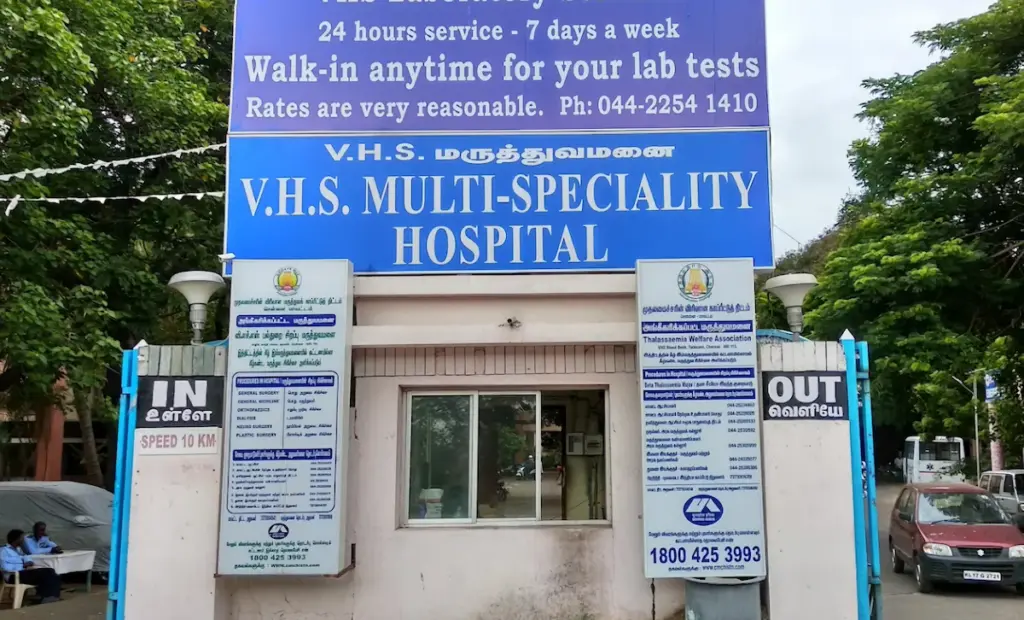
Voluntary Health Services (VHS), Chennai, is a non-profit healthcare institution providing affordable, ethical, and holistic medical care with a focus on prevention, research, and community health since its inception.
Dr. K. S. Sanjivi, whom many consider as “the father of the primary health care movement in India” was a doyen of the medical profession, a renowned physician and respected teacher – was a visionary who took up the challenge of improving the health care of the underprivileged by conceptualising, starting, and nurturing the Voluntary Health Services (VHS). Dr Sanjivi brought about a major change, by visualising preventive, promotive, rehabilitative and curative care as a continuum of care model.
The Voluntary Health Services (VHS) is based in Chennai, Tamil Nadu, India. The institution is registered as a non-profit society under the Registration of Societies Act, 1860. The hospital was inaugurated by the first Prime Minister of India – Pundit Jawaharlal Nehru. Dr. M. S. Swaminathan, renowned Agricultural Scientist is the President of VHS.
VHS offers affordable medical care services to people belonging to poorer backgrounds and low income groups based on their health care needs rather than their ability to pay. VHS approaches health care from a holistic perspective laying emphasis on disease prevention, health promotion, fostering and serving the family as a unit, actively promoting community participation and providing affordable care.
VHS also pioneered the model of Mini Health Centers with the aim of providing primary health care services to the poor near their place of residence and promoting community health through trained health workers from within the community.
VHS has been at the forefront of managing comprehensive community health and STI / HIV prevention programs for marginalized population, sexual minorities and deprived groups. Backed by nearly 20 years of wide ranging experiences in implementing HIV / AIDS prevention, care and support programs, building the capacity of Civil Society Organizations (CSOs) and training health care providers, VHS has built a reputation for understanding and addressing the needs of disadvantaged communities.
To become a trusted center of medical excellence by providing accessible, advanced, and compassionate healthcare to individuals from all walks of life.
Evidence-based, high-quality healthcare results in optimal outcomes for patients and strengthens the organization.
Providing care and essential infrastructure, irrespective of ability to pay, ensures equitable healthcare.
Compassionate care builds community trust and allows us to touch more lives.
Leveraging interdepartmental and external expertise leads to better patient outcomes.
Contribution to innovation through the creation of new knowledge is essential to advancing patient care.
Efficient systems enhance patient satisfaction and organizational growth.
Respect for each other will lead to a better work environment and stakeholder satisfaction.
Continuous upskilling at every level is essential for individuals to realise their full potential.
Integrity earns the trust of all stakeholders and ensures ethical and transparent healthcare delivery.
Engaging with the community creates awareness and builds VHS’ credibility.
Internal and external communication of VHS’ accomplishments enhances visibility and trust.

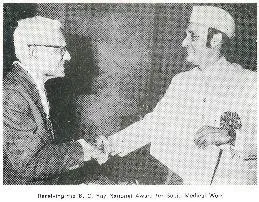
Dr. K. S. Sanjivi, a visionary medical doctor and Gandhian, is revered as the Father of Primary Healthcare in India. His lifelong commitment to equitable, accessible, and compassionate healthcare earned him numerous accolades, including the Padma Shri in 1971, the Padma Bhushan in 1976, and the Dr. B. C. Roy National Award for Socio-Medical Relief, also in 1976.
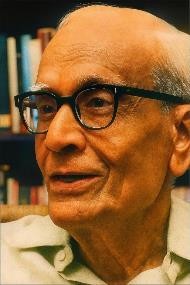
After completing his MBBS in 1927 and MD in General Medicine in 1932 from Madras Medical College—as one of the first four to do so—Dr. Sanjivi embarked on a government service career marked by dedication and excellence. His early postings included the Kilpauk Mental Hospital, Government Hospital in Madanapalle as Assistant Surgeon in 1933, and Erskine Hospital in Madurai (Now called as Govt. Rajaji Hospital).
In 1939, he was selected to study Chest Diseases at Brompton Hospital, London, but had to return due to the outbreak of World War II. In 1941 served at Royapettah Government Hospital, managing the TB ward and allergy clinic, before moving to the Government General Hospital as Resident Medical Officer in 1946. In 1947, he worked at Stanley Medical College as Professor of Medicine, and the following year trained in Chest Disease at Brompton at London then in 1948, got trained at the Mayo Clinic, Rochester, Minnesota, USA.
In 1948, Dr. Sanjivi was appointed Director of the Tuberculosis Research Centre at Chetput (Now called as National Institute for Research in Tuberculosis-NIRT) and Director of the TB Sanatorium (Now Called as Government Hospital of Thoracic Medicine) at Tambaram. He later became Professor of Medicine at Madras Medical College and Stanley Medical College, where he earned deep respect for his clinical acumen and pedagogical style. Known for his meticulously structured classes, gentle humour, and lifelong mentorship, he inspired generations of doctors.
Despite a stellar career, Dr. Sanjivi resigned from government service in 1957 after being overlooked for the post of Director of Medical Services. His moral compass led him away from institutional politics and towards a higher calling—providing quality healthcare to the underserved. He declined the prestigious position of Professor of Medicine at AIIMS Delhi to care for his ailing brother, Mr. K. S. Swaminathan, who later became the Chief Editor of Gandhi’s Collected Works in New Delhi for over three decades.
The VHS model emphasized prevention, affordability, and community ownership. It introduced India’s first community-based health insurance scheme, allowing entire families access to medical services in exchange for a nominal fee.
Dr. Sanjivi’s holistic healthcare approach included:
He was known for refusing unnecessary investigations or expensive medications when simpler options were effective. His diagnostic precision often identified benign conditions misdiagnosed as serious elsewhere. He treated everyone with equal care, whether a governor, an industrialist, or a Daily wage employee.
Under his leadership, VHS established 14 rural mini-health centres, serving over 100,000 people, providing immunization, maternal care, sanitation, school health checks, and vital statistics maintenance.
In 1978, Dr. K.S. Sanjivi, then serving as Director of Projects at Voluntary Health Services (VHS) and Vice Chairman of the MAC/ICH, was appointed as a UNICEF Consultant on Primary Health Care. In this role, he was tasked with advising on the introduction and implementation of Primary Health Care in the Intensive Development Blocks across various states in India. As part of his assignment, Dr. Sanjivi undertook extensive tours of development blocks in six states and visited the respective State Capitals to engage in discussions with senior government officials on matters related to Primary Health Care.
Towards the end of his life, Dr. Sanjivi played a key role in HIV/AIDS prevention and control efforts. In 1995, USAID recognized his work by appointing VHS as the nodal agency for the AIDS Prevention and Control (APAC) project in Tamil Nadu.
Dr. Sanjivi advised young doctors:
Always to treat patients with kindness, dignity, and fairness
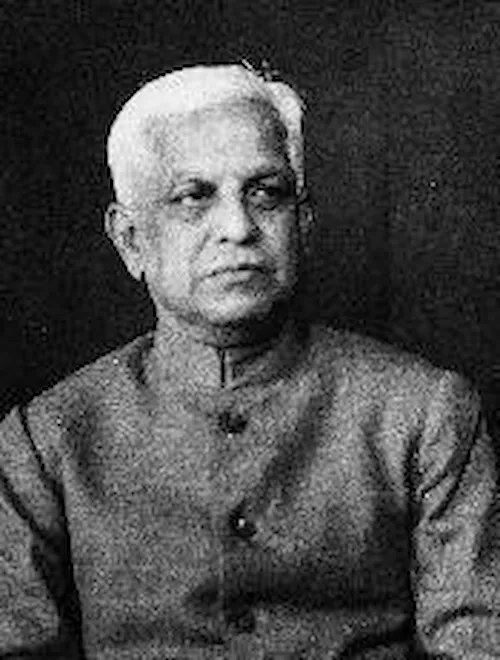
Established on 14 July 1958 as a registered society, Voluntary Health Services (VHS) was the brainchild of Dr. K.S. Sanjivi, a visionary and a champion of equitable healthcare. The Tamil Nadu Government generously sanctioned 25 acres of land in Adyar and extended financial support for construction and equipment. The first major donation came from the Madras Race Club – ₹5 lakh and the proceeds of a day’s racing.
(Chief Editor, The Hindu)
(Industrialist)
Ex-CM(TN) & Congress Leader
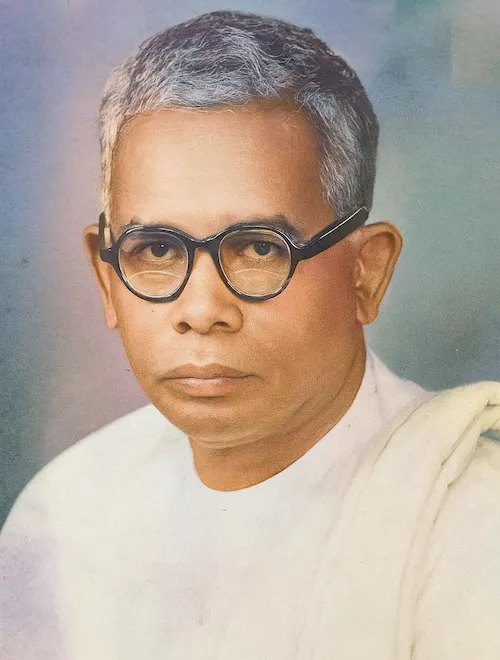
(Legal Luminary)
VHS took root on a 25-acre plot granted by the Government of Tamil Nadu in Adyar, Chennai on 5th June 1961. Mr. R.R. Sarma, Consulting Architect who designed functional and fantastic buildings of Chennai like MAC stadium in Chepauk and the LIC tower on Anna Salai to the RBI office on Rajaji Salai provided the plans and estimates entirely free.
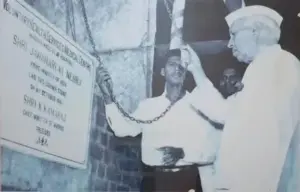
The first block of building’s (The Madras Race Club Hospital) foundation stone was laid by Pandit Jawaharlal Nehru on 08th October 1961 presided by Mr. K. Kamaraj, Chief Minister of Madras, and the hospital became functional in 15th July 1963 by admitting its first patient.
VHS was envisioned as a model institution grounded in community participation and preventive care. It pioneered India’s first community-based health insurance scheme, enabling entire families to receive medical services for a nominal fee. The term ‘Voluntary’ symbolized not only the commitment of doctors who waived their professional fees but also the proactive involvement of the community in healthcare delivery.
Over the decades, VHS has evolved into a multi-super specialty hospital and research institution, equipped with modern infrastructure, advanced diagnostics, and highly skilled professionals. Several departments have become centres of excellence in Chennai, offering cutting-edge care across disciplines.
Through this extensive network of clinical departments, VHS continues to serve as a premier tertiary healthcare institution, ensuring holistic and high-quality medical care for individuals from all walks of life, especially the underserved.
VHS is governed by a Board of Trustees, a Central Committee, and specialized working groups consisting of eminent professionals, community leaders, and philanthropists. Over 100 doctors — including many senior consultants — serve honorarily, exemplifying the spirit of voluntary service.
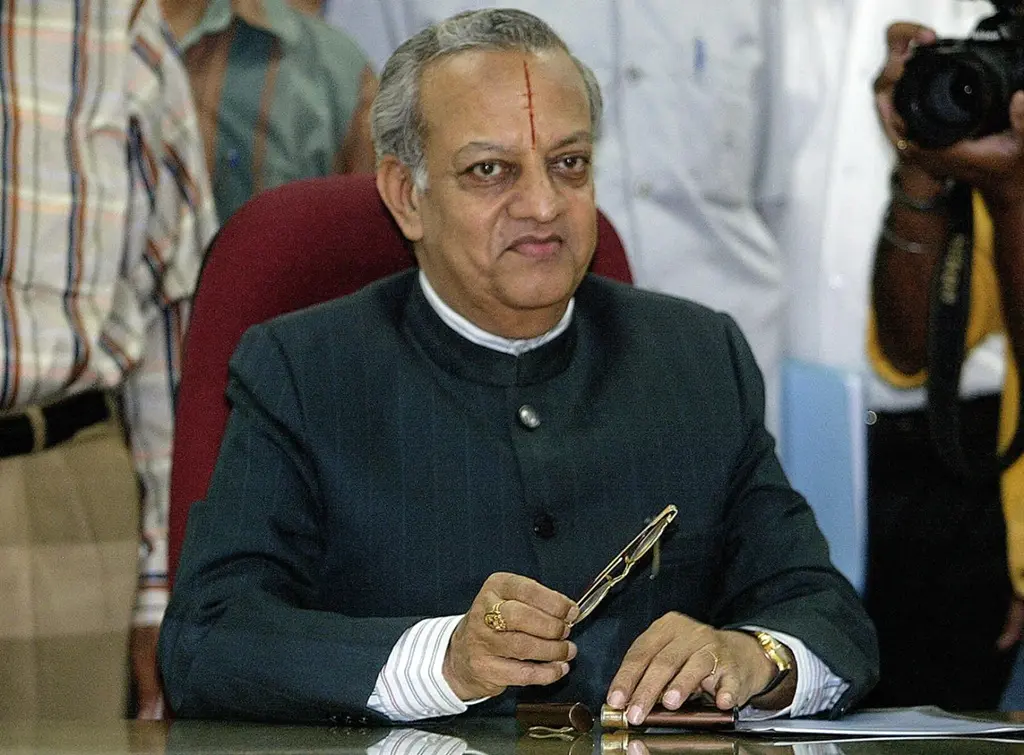
I.A.S. (Rtd.)
Former Chief Election Commissioner of India
Managing Director
Aravind Laboratories
MBBS, FRCOG (Hon), D.Sc. (Hon)
I.A.S. (Rtd.)
Former Chief Secretary, Govt. of TN
MBBS, FRCOG (Hon), D.Sc. (Hon)
MD, MPH
MD (Gen. Med.)
MD, DGO.
B.Sc., ACA
PGDBA (HRM)
B.E.
M.Phil., MBA
MHA
The Voluntary Health Services (VHS) journey began in 1958, when Dr. K.S. Sanjivi, a Gandhian physician, resigned from government service with the conviction that healthcare is a right, not a privilege. Supported by visionaries such as Kasturi Srinivasan and M.A. Chidambaram, he established India’s first Public-Private-Community Partnership in healthcare, sowing the seeds of an institution that would transform medical access in South India.
Starting as a modest 30-bed facility, VHS has grown into a 465-bed tertiary referral hospital. Over the decades, national leaders including Prime Ministers Jawaharlal Nehru and Indira Gandhi inaugurated milestone facilities, recognizing the institution’s national importance.
VHS has always prioritized the underserved — with 70% of care provided free or at subsidized costs. Its reach extends beyond hospital walls, through 14 Mini Health Centres delivering grassroots healthcare, maternal services, and sanitation initiatives.
Today, VHS is more than a hospital — it is a living movement of trust, compassion, and ethical service, carrying forward the vision of its founder while adapting to modern healthcare needs.
VHS has earned recognition at both national and global levels for its unwavering commitment to quality and equity in healthcare.
NABH, NABL, and ISO accreditations reflect adherence to the highest standards of safety, diagnostics, and service quality.
The hospital runs DNB programs, nursing education, and skill-development initiatives, preparing the next generation of caregivers.
Long-standing partnerships with the WHO, NACO, NIH (USA), ICMR, Rotary, UNAIDS, and NGOs have advanced both research and public health outcomes.
VHS has been recognized for pioneering community outreach, HIV/AIDS programs, and de-addiction services — blending medical expertise with social responsibility.
Each accreditation and award is a reaffirmation of VHS’s legacy — a promise of quality, credibility, and compassion.
Founded by Dr. K.S. Sanjivi.
Cornerstone laid by Prime Minister Jawaharlal Nehru.
First inpatient admitted; hospital operations begin.
VHS Blood Bank launched — a pioneer in Chennai.
OP Block inaugurated by Prime Minister Indira Gandhi.
Recognized as a Research Organization.
Dedicated Urology services initiated.
Diabetes Department inaugurated, a national trailblazer.
Rajaji Centre for De-addiction launched.
Designated nodal agency for APAC Project.
New Cardiology Block inaugurated.
VHS Cares Rehabilitation Services launched.
Abhimanyu Block (Maternity & Child Health) opened.
Emergency & Trauma Care Centre inaugurated.
Advanced Imaging Suite with CT, MRI, Mammogram & DEXA.
From its humble 30-bed origin to a multi-speciality institution serving over 15 lakh patients since inception, VHS’s milestones stand as a testament to its resilience, innovation, and deep commitment to public service.